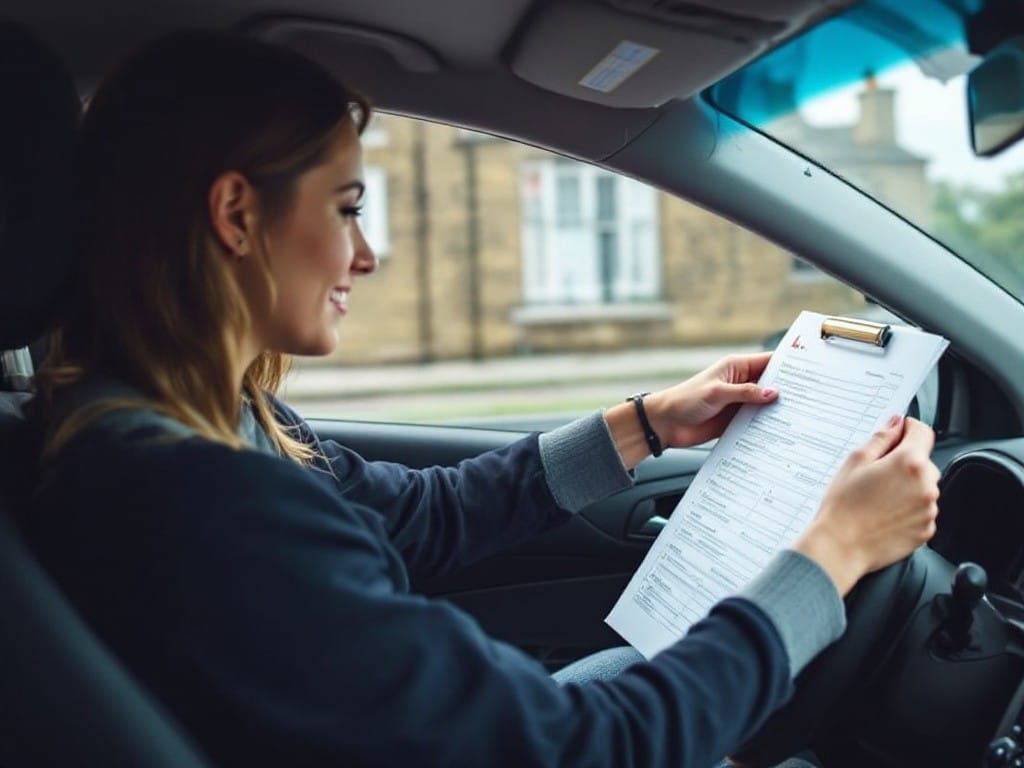
If you have recently started driving lessons in South West London or you’re about to there’s a good chance you’ve already come across the word “carriageway” and wondered what it actually means. You’re not alone. Understanding UK carriageways is one of those things that gets glossed over in theory test revision books without much real-world explanation. And when you’re sat behind the wheel for the first time on a busy road near Wimbledon or Morden, the last thing you need is confusion about carriageway rules and what type of road you’re actually on.
That matters more than most people think. Knowing the difference between a single carriageway and a dual carriageway affects your speed, your positioning, how you overtake, and how your examiner judges your awareness on test day. So let’s break it down properly.
What Is a Carriageway?
In plain English, a carriageway is simply the part of the road that vehicles travel on. Not the pavement, not the grass verge, not the cycle lane painted alongside just the section where cars, vans, buses, and lorries drive.
People often mix up “road” and “carriageway,” which is understandable. The road is the whole thing pavements, kerbs, cycle paths, central reservations, and all. The carriageway is one side of it. A road can have one carriageway or two, and that distinction changes everything about how you drive on it.
Types of Carriageways in the UK
There are two main categories you need to know, and once you understand the difference, a lot of other rules start to fall into place.
Single Carriageway Roads
A single carriageway is any road where traffic travelling in opposite directions shares the same stretch of tarmac, usually separated by nothing more than a painted white line.
These can be anything from a narrow country lane with barely enough room for two cars to pass, to a wide A-road with two or three lanes in each direction. The key point is this: there’s no physical barrier dividing the traffic going one way from the traffic going the other. Just paint on the ground.
Single carriageways are where most learner drivers spend the majority of their training hours, and for good reason. They make up the bulk of roads in residential areas across Wimbledon, Mitcham, Balham, Morden, and most of the other South West London neighbourhoods you will be driving through during your lessons.
Common learner mistakes on single carriageways:
- Drifting too close to the centre line, especially on narrower streets where parked cars force you out
- Forgetting to check mirrors before adjusting position around obstacles
- Misjudging speed going 40 in a 30 zone because the road “feels” wide enough, or crawling at 20 when the limit is 30 because you are nervous
- Struggling with oncoming traffic on narrow roads not knowing when to give way and when to hold your position
Dual Carriageways
A dual carriageway is a road where a physical barrier usually a central reservation made of grass, concrete, or metal barriers separates the traffic flowing in each direction. Each side is its own carriageway, typically with two or more lanes.
If you’re learning to drive around Morden, you’ll encounter dual carriageways on test routes. The A24 (London Road) and sections of the A3 Kingston Bypass are both dual carriageways that regularly feature on Morden and Tolworth test routes. The speed limit on a dual carriageway is usually 70 mph outside built-up areas, though in London most sections are restricted to 40 or 50 mph.
What makes dual carriageways tricky for learners:
- Joining: You need to build up speed on the slip road and merge smoothly into moving traffic. Hesitating or stopping at the end of a slip road is one of the most common test faults
- Lane discipline: The left lane is for normal driving. You move to the right to overtake, then return to the left. Sitting in the middle or right lane when the left lane is clear is called “lane hogging” and it can pick up a minor fault or worse
- Leaving safely: Spotting your exit, signalling in good time, and moving into the left lane well before the turn-off
Lane Rules Every Learner Driver Should Know
Lane discipline is one of those things that seems obvious in theory but catches people out on the road. Here is what you actually need to do:
Keep left unless overtaking. This applies on any road with more than one lane going your way. The left lane is the default. You move right only when you need to pass someone, and you return to the left once you have done so. On dual carriageways and multi-lane A-roads, sitting in the right lane when the left is empty is bad practice and examiners notice it.
Mirror checks before everything. Before you change lanes, before you adjust your speed, before you signal check your mirrors. The routine is interior mirror, then the door mirror on the side you are moving towards, then signal, then a shoulder check if needed. Your instructor will drill this into you until it becomes second nature, and there is a reason for that. Poor mirror use is one of the top reasons people fail their practical test.
Safe lane changes take time. Don’t swerve across. Check mirrors, signal, check the blind spot over your shoulder, and move across gradually. If you’re not sure there is space, wait. It’s always better to miss an exit and go around again than to cut someone up. source Govt Uk.
Common Carriageway Mistakes During Driving Tests
Having trained hundreds of learners across South West London, the carriageway-related faults we see on test day tend to fall into a few predictable categories:
Staying in the wrong lane. This happens most often at multi-lane roundabouts and on dual carriageways. If the road markings tell you to be in the left lane for your exit, get there early. Last-second lane changes look panicked and they create risk.
Poor observations at junctions. When you are joining a faster carriageway from a side road, you need to look properly not just a quick glance. Examiners watch your head and eyes. If they don’t see you looking right, left, and right again, they will mark it down even if you did look.
Incorrect speed choice. Driving 40 mph on a national speed limit dual carriageway will frustrate other drivers and may count as a fault for not making reasonable progress. Equally, touching 35 in a 30 zone because didn’t notice the signs will get marked as well. Watch the signs, read the road, and adjust accordingly.
Hesitation when joining. This is a big one. When a gap appears on a dual carriageway or at a roundabout, you need to go for it. Waiting too long for a “perfect” gap causes delays and can earn you a serious fault if the examiner judges you could have gone safely.
How Glow Driving School Helps Learners Build Road Confidence
At Glow Driving School, we teach carriageway skills from the first few lessons not by throwing you onto a dual carriageway on day one, but by building up to it logically. We start on quieter residential streets around Wimbledon and Morden, working on your observation and positioning. Once you’re comfortable with single carriageway driving, we introduce busier A-roads and the dual carriageways you will face on test routes around the A24 and A3.
Our instructors are DVSA-approved and trained to break down exactly what you need to do at every stage whether that is explaining lane discipline at Rosehill Roundabout, practising safe merging on the Kingston Bypass, or just getting you confident enough to drive at 40 mph without gripping the steering wheel like your life depends on it.
We cover every area across South West London including Wimbledon, Morden, Mitcham, Putney, Battersea, Fulham, Balham, Tooting, Chelsea, Roehampton, Clapham, Pimlico, and Nine Elms.

Ready to get started? Book driving lessons with Glow Driving School and learn how to handle every type of UK road safely. Call us on 020 8087 4546 or message us on WhatsApp.