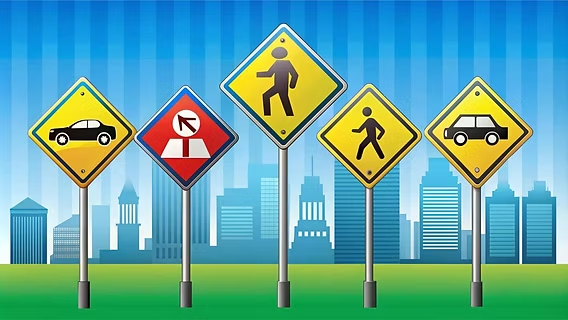
UK road signs form the primary communication system between road infrastructure and drivers. The Highway Code documents over 600 legally defined road signs across the UK network. Each sign carries a fixed, enforceable meaning, and misreading one produces direct consequences: missed junctions, incorrect lane positioning, or road traffic collisions.
The Driver and Vehicle Standards Agency (DVSA) tests road sign recognition in both the theory test and the practical driving test. In 2023, over 1.5 million theory tests were sat in the UK, with sign recognition among the most frequently failed sections. At 30 mph, a driver processes a road sign in under 2 seconds. At 70 mph, that window reduces to 0.8 seconds, making accurate sign recognition a core driving competency, not a supplementary one.
This guide addresses four groups of road users, each with a distinct learning need:
- Learner drivers building sign recognition ahead of the DVSA theory and practical tests
- Theory test candidates targeting first-time pass rates on road sign identification questions
- New UK residents transitioning from overseas driving experience to UK road sign standards
- International licence holders adapting to UK-specific signs, including post-Brexit regulatory updates
How Many Road Signs Are There in the UK?
The UK road network uses over 600 officially recognised road signs, as documented across the Traffic Signs Regulations and General Directions (TSRGD) 2016 and the Highway Code. These signs divide into four functional categories regulatory, warning, information, and direction each governing a distinct aspect of road behaviour.
The Official Number of UK Road Signs
The UK road sign system contains over 600 distinct sign types, with the full set defined under the Traffic Signs Regulations and General Directions (TSRGD) 2016. This figure covers permanent regulatory signs, temporary signs, motorway-specific signs, and tourist destination signs. The TSRGD 2016 replaced the previous 2002 edition and introduced 33 new sign types, expanding the total count to reflect modern road infrastructure including cycling lanes, smart motorways, and low emission zones.
Where UK Road Signs Are Governed
UK road signs are governed by three principal legal documents: the Traffic Signs Regulations and General Directions (TSRGD) 2016, the Highway Code, and the Traffic Management Act 2004. The Department for Transport (DfT) holds authority over sign design, placement, and legal enforceability across England, Scotland, and Wales. Transport Scotland and Welsh Government each carry devolved responsibility for road sign implementation within their respective jurisdictions. Local highway authorities enforce sign placement at a regional level, including in areas such as London where Transport for London (TfL) maintains additional regulatory oversight.
Why This Matters for Your Theory Test
The DVSA theory test draws road sign questions directly from the Highway Code, which references the full TSRGD 2016 sign set. The theory test contains 50 multiple-choice questions, with road sign identification forming a consistent portion of the question bank. DVSA data shows that sign recognition questions carry a 57% average difficulty rating among first-time candidates. Learner drivers who study signs by category shape, colour, and purpose rather than individually, retain sign meanings with greater accuracy across the full 50-question test format.
Understanding UK Road Signs — The Three Classification Systems
UK road signs classify under three independent systems: purpose, shape, and colour. The Highway Code and TSRGD 2016 define each system separately, and all three operate simultaneously on every sign across the UK road network. Studying all three systems together produces faster, more accurate sign identification than studying any single system in isolation.
Classification by Purpose — What Each Sign Is Telling You
Purpose-based classification divides UK road signs into four functional categories: order-giving, warning, information, and direction. Each category carries a distinct communication role, and every sign on the UK road network belongs to exactly one of these four categories.
Order-Giving Signs
Order-giving signs are legally enforceable instructions that all road users on public highways are obligated to follow under the Road Traffic Act 1988. Non-compliance constitutes a road traffic offence, carrying penalties including fixed penalty notices, licence endorsements, and prosecution. The UK road network uses 14 nationally recognised prohibition signs and 8 mandatory instruction signs, including no entry, no U-turn, give way, and stop.
Warning Signs
Warning signs are advance hazard notifications placed before road conditions, junctions, or obstructions that require a reduction in speed or an increase in driver alertness. The Highway Code documents 46 primary warning sign types across the UK network, covering 6 hazard categories: junctions ahead, pedestrian crossings, level crossings, road narrowing, sharp bends, and steep gradients.
Information Signs
Information signs are advisory notices that communicate permitted actions, available facilities, and prevailing road conditions without imposing a legal obligation. The TSRGD 2016 defines 38 standard information sign types across the UK network, covering urban, rural, and motorway environments, including parking zone boundaries, hospital ahead indicators, and lane designation markings.
Direction Signs
Direction signs are navigational markers that guide drivers toward destinations, junctions, and road networks using 3 standardised formats: blue backgrounds on motorways, green backgrounds on primary routes, and white backgrounds on local routes. All motorway and primary route direction signs use the Transport Heavy typeface, ensuring consistent legibility at speeds between 50 and 70 mph across all road types.
Classification by Shape — The Fastest Way to Read Any Sign
Shape-based classification provides immediate categorical recognition of any UK road sign before the driver reads its symbol or text. The TSRGD 2016 assigns 4 primary shapes across the full UK sign set — circles, triangles, rectangles, and special shapes — each carrying a fixed meaning independent of the sign’s specific content.
Circular Signs — Signs That Give Orders
Circular signs give mandatory orders and divide into 2 types based on border colour. Red-bordered circles impose prohibitions, covering speed limits of 20, 30, 40, 50, 60, and 70 mph, no entry, and no overtaking. Blue circles carry mandatory positive instructions, including keep left, turn ahead, and minimum speed limits. The circular shape alone signals a legal obligation, making it the highest-authority shape in the UK sign system.
Triangular Signs — Signs That Warn
Triangular signs communicate hazard warnings in 2 configurations. Upright red-bordered triangles warn of 46 defined hazard types, including crossroads, T-junctions, pedestrian crossings, and loose chippings. The inverted red triangle carries the single dedicated meaning of give way to traffic on the major road, appearing at 32,000 give way junctions across the UK network.
Rectangular Signs — Signs That Inform
Rectangular signs deliver route and facility information across 3 background colour formats: blue on motorways, green on primary routes, and white on local roads and regulatory panels. Rectangular signs also carry supplementary plate information, including distance markers, time restrictions, and vehicle class exceptions, positioned directly below the primary sign face.
Special Shape Signs
Special shape signs carry unique categorical meanings assigned to 2 dedicated sign types. The pentagon identifies school warning zones, marking the 5 specific areas around primary and secondary schools where a 20 mph limit applies during designated hours. The octagon is reserved exclusively for the STOP sign, used at junctions where forward visibility falls below 90 metres, and it shares the same internationally recognised shape meaning across 41 countries, including the USA and all EU member states.
| Shape | Category | Border or Background | Primary Meaning |
| Circle | Order | Red or Blue | Prohibition or Mandatory Instruction |
| Triangle | Warning | Red Border | Hazard Ahead |
| Rectangle | Information | Blue, Green, or White | Route, Facility, or Regulation |
| Pentagon | Warning | Yellow and Black | School Zone |
| Octagon | Order | Red Background | Stop — Full Legal Obligation |
Classification by Colour — Decode Any Sign at a Glance
Colour-based classification enables instant categorical identification of any UK road sign before its symbol or text is read. The TSRGD 2016 assigns 6 primary colours across the full UK sign set, each mapped to a fixed sign category.
Red Signs — Prohibition and Danger
Red signs communicate prohibition and danger across the UK road network. Red appears as the border colour on circular prohibition signs and triangular warning signs, and as the background on the STOP octagon. Speed limit circles, no entry signs, and give way triangles all use red as their primary identification colour.
Blue Signs — Mandatory Instructions and Motorway Information
Blue signs carry mandatory instructions and motorway route information across 2 distinct applications. Blue circles impose positive mandatory instructions, including keep left, turn ahead, and minimum speed. Blue rectangles appear exclusively on motorways, carrying route numbers, junction numbers, distance markers, and lane designations under the motorway regulatory framework.
Green Signs — Primary Route Directions
Green signs identify primary route destinations on A-roads and trunk roads. The green background with white text and yellow route numbers is the standardised primary route format defined in TSRGD 2016. Green direction signs appear at every junction where a primary route designation applies, connecting major urban centres, ports, and airports across the UK network.
Yellow Signs — Temporary and Roadworks Signs
Yellow signs designate temporary traffic management measures, including roadworks, lane closures, and diversion routes. Under the Traffic Signs Regulations, yellow background signs take legal precedence over permanent signs at any location where both appear simultaneously. The Highways England strategic road network carries an average of 2,700 active yellow temporary sign deployments at any given time.
Brown Signs — Tourist and Leisure Destinations
Brown signs direct drivers to tourist attractions, heritage sites, and leisure facilities across the UK. The Department for Transport approves each brown sign application through a formal assessment process, and over 2,500 brown tourist signs are currently authorised on the UK network across 6 qualifying destination categories: historic properties, museums, wildlife sites, activity centres, resorts, and religious buildings.
Black and White Signs — Regulatory and Speed Limit Signs
Black and white signs carry national speed limit and local regulatory information on urban and rural roads. The national speed limit sign — a white circle with a diagonal black stripe — indicates 60 mph on single carriageways and 70 mph on dual carriageways and motorways. White rectangular signs with black text communicate parking regulations, weight restrictions, and height limits enforced under local traffic orders.
| Colour | Application | Sign Type | Primary Meaning |
| Red | Border or Background | Circles, Triangles, Octagon | Prohibition, Warning, Stop |
| Blue | Background | Circles, Rectangles | Mandatory Instruction, Motorway |
| Green | Background | Rectangles | Primary Route Direction |
| Yellow | Background | Rectangles | Temporary, Roadworks |
| Brown | Background | Rectangles | Tourist and Leisure |
| Black and White | Background | Circles, Rectangles | National Speed Limit, Regulatory |
Most Important UK Road Signs Every Driver Must Know
UK roads carry over 430 legally defined sign types, governed by the Traffic Signs Regulations and General Directions (TSRGD) 2016. Every driver — learner or qualified — recognises these signs to navigate safely and lawfully.
Speed Limit Signs and Their Variations
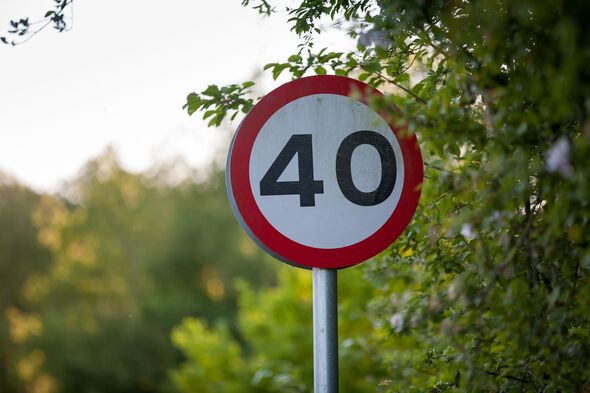
UK speed limit signs use circular red-bordered white panels displaying a numeric value in mph. The Highway Code defines 6 national speed limit categories, including 20 mph, 30 mph, 40 mph, 50 mph, 60 mph, and 70 mph.
The national speed limit sign — a white circle with a diagonal black stripe — applies 60 mph on single carriageways and 70 mph on dual carriageways and motorways. A 30 mph sign applies automatically in street-lit areas, even without a posted sign.
Repeater signs appear every 450 metres in 20 mph and 40 mph zones, reinforcing the limit between entry signs. Variable speed limit signs, displayed on overhead gantries on smart motorways, carry the same legal force as fixed signs.
Speed limit variations by road and vehicle type:
| Limit | Road Type | Vehicle |
| 20 mph | Urban zones, school areas | All vehicles |
| 30 mph | Street-lit roads | All vehicles |
| 60 mph | Single carriageway | Cars |
| 70 mph | Motorway / dual carriageway | Cars |
| 60 mph | Motorway / dual carriageway | Vehicles towing trailers |
Give Way vs STOP — What Is the Difference?
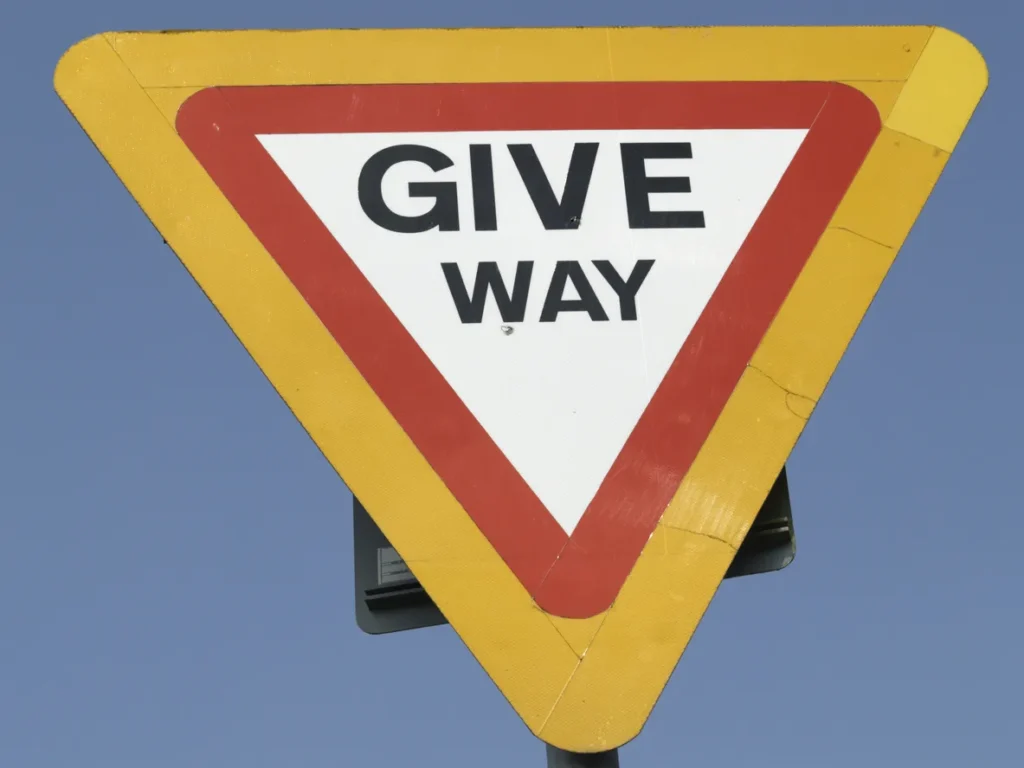
A Give Way sign is an inverted red-bordered triangle, requiring drivers to yield to traffic on the major road without a mandatory stop. A STOP sign is a red octagon with white lettering, requiring a complete stop at the line, regardless of traffic presence.
The Highway Code Rule 172 states that drivers at a STOP sign stop completely before proceeding. Give Way applies at approximately 80% of UK junctions; STOP signs appear at high-risk junctions with restricted visibility.
Key distinctions:
- Give Way — yield if traffic is present; stopping is not mandatory
- STOP — full stop is legally required every time, regardless of conditions
- Give Way line — broken white lines across the road
- STOP line — solid white line across the road
Failing to stop at a STOP sign carries 3 penalty points and a £100 fixed penalty notice.
No Entry and Prohibited Signs
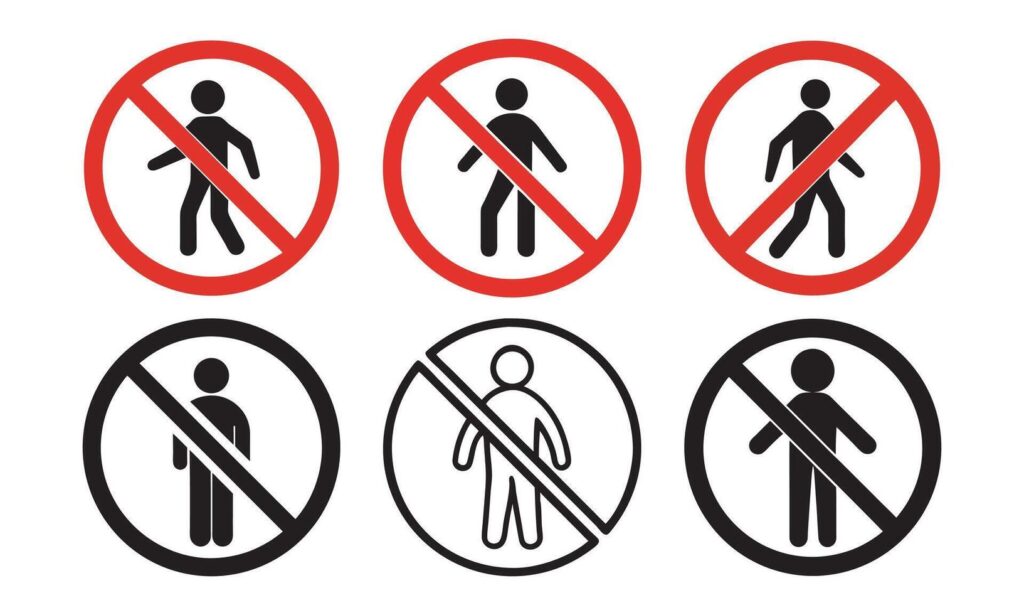
No Entry signs are red circles with a horizontal white bar, prohibiting all vehicle entry into a one-way street or restricted zone. They appear at exit points of one-way roads and restricted access areas across the UK.
Prohibited signs are red circles displaying the specific prohibition, including no left turn, no right turn, no U-turn, and no overtaking. Each carries a legal obligation under TSRGD 2016.
Common prohibited signs and their meanings:
- No left turn — red circle, leftward curved arrow with cross
- No right turn — red circle, rightward curved arrow with cross
- No U-turn — red circle, U-shaped arrow with cross
- No overtaking — red circle, two car silhouettes side by side
- No motor vehicles — red circle, car and motorcycle silhouette
Ignoring a No Entry sign constitutes a moving traffic offence, carrying 3 penalty points and a £100 fine.
Pedestrian Crossing Signs
UK pedestrian crossing signs are red-bordered triangles displaying a walking figure, warning drivers of a designated crossing point ahead. The Highway Code identifies 5 main pedestrian crossing types in the UK.
Each crossing type carries distinct road markings and signals:
- Zebra crossing — black and white stripes, no traffic lights, pedestrians have priority once on the crossing
- Pelican crossing — traffic light controlled, flashing amber phase requires drivers to give way to pedestrians still crossing
- Puffin crossing — sensors detect pedestrians, no flashing amber phase
- Toucan crossing — shared by pedestrians and cyclists, wider crossing point
- Pegasus crossing — used by horse riders, control buttons positioned at 2 metres height
Zebra crossings account for approximately 25% of all UK pedestrian crossings. Failing to give way at a zebra crossing carries 3 penalty points.
School Zone and Children Hazard Signs
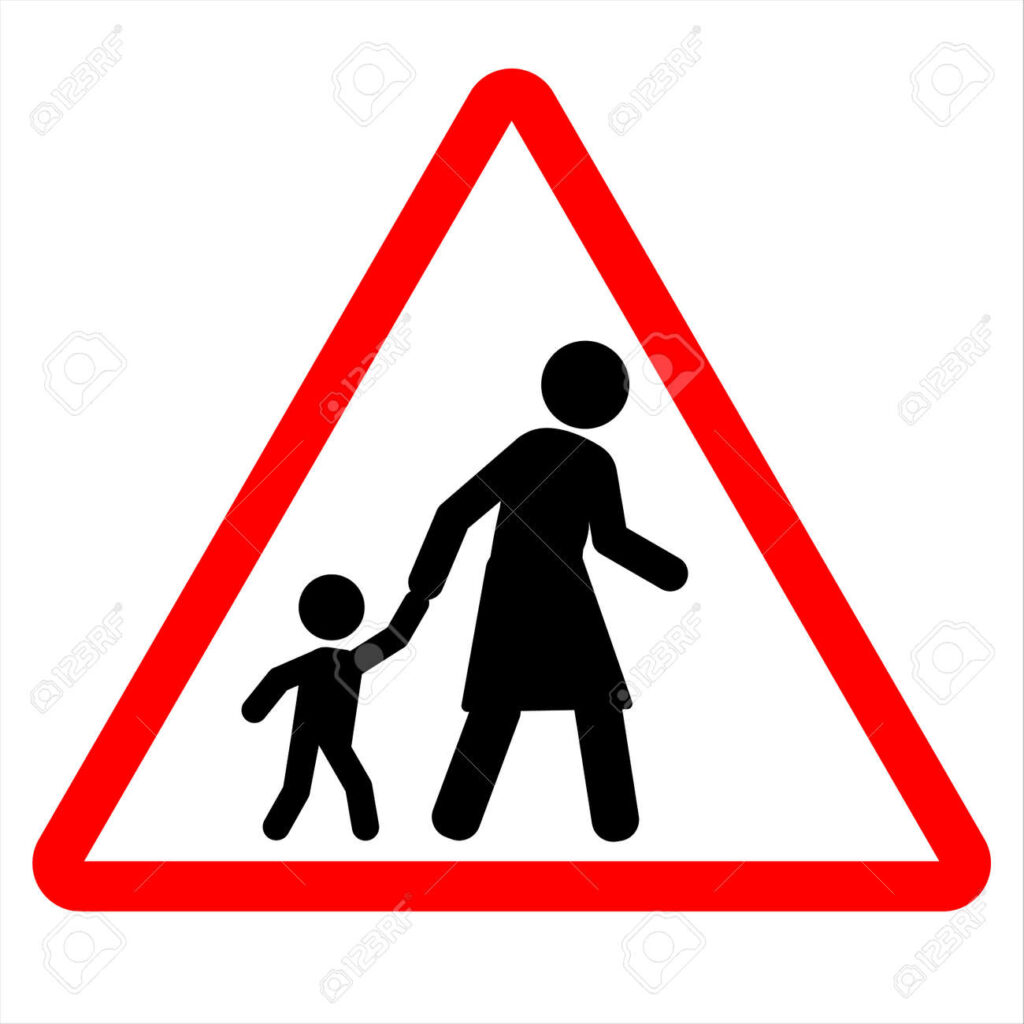
The school warning sign is a yellow-backed pentagon displaying two children walking, making it the only pentagonal road sign in the UK. It marks the 100-metre approach zone to a school entrance.
School zone indicators include:
- Zigzag yellow lines — no stopping, parking, or overtaking during school hours
- Keep Clear markings — yellow box junction outside school gates
- 20 mph speed limit signs — mandatory in most UK school zones since 2022
The Department for Transport reports that 40% of child pedestrian casualties occur within 500 metres of a school. Stopping on school zigzag lines carries a £100 fixed penalty notice and 3 penalty points.
Motorway Signs Explained
Motorway signs use blue rectangular panels with white lettering for direction and information, and white rectangular panels for regulatory information. The Highway Code and TSRGD 2016 govern all motorway signage.
Motorway sign categories include:
- Blue direction signs — junction numbers, route numbers, and destinations
- Overhead gantry signs — lane control signals, variable speed limits, and hazard warnings
- Red X signals — lane closed ahead, displayed on overhead gantries; illegal to continue in that lane
- Amber flashing lights — hazard ahead, reduce speed
- Green directional arrows — lanes open to traffic
Smart motorway gantry signs display variable speed limits between 20 mph and 60 mph. A red X above a lane is a mandatory instruction, and continuing past it carries a £100 fine and 3 penalty points.
Route numbering on motorway signs follows the M-prefix system, including M1, M25, and M6, with junction numbers increasing from south to north and east to west.
Roundabout Signs
The roundabout warning sign is a red-bordered triangle with three curved arrows forming a circle, alerting drivers to a roundabout ahead. Direction signs at roundabouts use blue rectangular panels on motorways and green rectangular panels on primary routes.
Roundabout sign types and their functions:
- Warning triangle — roundabout ahead, reduce speed
- Mini-roundabout sign — blue circle with white circular arrow, mandatory give way
- Direction signs — destination and route information on approach arms
- Painted arrows — lane discipline markings on the roundabout approach
The Highway Code Rule 185 confirms that vehicles approaching a roundabout give way to traffic already on it. The UK has approximately 25,000 roundabouts, more than any other country in Europe.
Parking and Waiting Restriction Signs
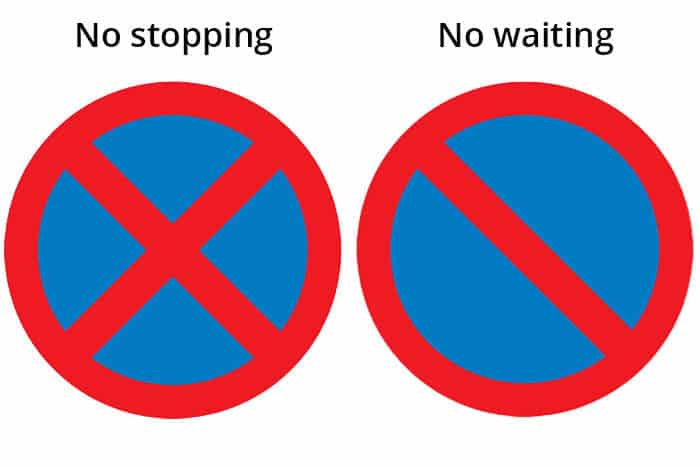
UK parking and waiting restrictions use circular blue signs, yellow line road markings, and kerb blips to define where and when parking applies. The Highway Code and local Traffic Regulation Orders (TROs) govern all restriction types.
Core restriction signs and markings:
- Double yellow lines — no waiting at any time
- Single yellow line — restricted waiting, hours shown on nearby kerb plate
- Blue badge bay — blue rectangle with wheelchair symbol, reserved for Blue Badge holders
- Residents’ parking bay — white bay markings with zone designation
- Loading restrictions — yellow kerb blips, single blip for limited hours, double blip for no loading at any time
- No parking sign — blue circle, red border, red cross
Controlled Parking Zones (CPZs) in London cover over 2,500 streets, with restriction hours varying between 8:30 am and 6:30 pm. Parking in a restricted zone carries a Penalty Charge Notice (PCN) between £65 and £130 in London.
Temporary Road Signs and Roadworks Signs in the UK
What Are Temporary Road Signs?
Temporary road signs are legally enforceable traffic management signs erected by highway authorities under the Traffic Signs Regulations and General Directions 2016 (TSRGD 2016). They apply during roadworks, utility works, road closures, and hazardous surface conditions.
The UK deploys temporary signs across 3 primary operational contexts:
- Roadworks zones — active construction or utility maintenance on or adjacent to carriageways
- Incident management zones — police or National Highways-controlled closures following collisions or structural road damage
- Seasonal and environmental events — flooding, ice, or surface failure warnings issued by local highway authorities
Temporary signs carry the same legal weight as permanent signs under Section 36 of the Road Traffic Act 1988. A driver who disobeys a temporary sign commits the same offence as disobeying a permanent one. The DVSA confirms this in Highway Code Rules 288–290.
Temporary roadworks signs use a fluorescent yellow-green background, distinguishing them from permanent white or blue regulatory signs under TSRGD 2016 Schedule 13. Variable Message Signs (VMS) electronic matrix boards also function as legally binding temporary signs on motorways and A-roads managed by National Highways.
Common Roadworks Signs and What They Mean
The UK deploys 10 primary roadworks sign types under TSRGD 2016 Schedule 13, each carrying a distinct legal instruction or hazard warning.
The 10 most common roadworks signs in the UK include:
- Road Works Ahead — triangular red-border warning sign indicating active works within 500–1,000 metres ahead
- Lane Closed Ahead — rectangular sign with diagonal red-and-white chevron stripes, signalling a mandatory lane reduction
- Mandatory Speed Limit (e.g., 50 mph) — red-border circular sign imposing a legally enforceable speed reduction inside a roadworks zone; carries identical penalty to a permanent speed limit sign
- No Overtaking — circular red-border sign with two car symbols, prohibiting overtaking for the full duration of the works zone
- Keep Left / Keep Right — blue circular mandatory signs directing traffic flow around physical obstructions or contra-flow systems
- Convoy Working — rectangular information sign indicating single-file traffic controlled by a stop-and-go board or temporary traffic signals
- Road Narrows — triangular warning sign indicating carriageway width reduction, paired with a distance plate in metres
- Loose Chippings — triangular warning sign for surface treatment zones; National Highways recommends 20 mph in active loose chipping areas
- End of Roadworks — rectangular sign confirming termination of all temporary restrictions and resumption of permanent sign applicability
- Temporary Traffic Signals — warning sign indicating ahead signal control, paired with a distance plate such as “Traffic signals — 300 yards”
National Highways data confirms speed cameras operate in 85% of active Smart Motorway roadworks zones in England, with average speed check systems covering the full zone length.
Why Temporary Signs Override Permanent Ones
Temporary signs supersede permanent signs at the same location under TSRGD 2016 Regulation 11 and Road Traffic Act 1988 Section 36(1). A Temporary Traffic Regulation Order (TTRO) issued by a highway authority suspends the legal standing of a permanent sign for its active duration.
3 legal principles govern this override:
- Temporal authority — a TTRO removes permanent sign applicability for a period ranging from 1 day to 18 months, under Road Traffic Regulation Act 1984 Section 14
- Physical precedence — where a temporary sign directly contradicts a permanent sign, the temporary sign defines the lawful obligation; a permanent 70 mph motorway limit is legally inactive where a temporary 50 mph sign applies
- Enforcement continuity — the National Police Chiefs’ Council confirms police enforce temporary sign compliance identically to permanent sign compliance, with no legal distinction between the two
Temporary signs also override road markings. A temporary lane boundary line supersedes a permanent white line beneath it, per TSRGD 2016 Schedule 9. A permanent national speed limit sign becomes legally suspended inside a Smart Motorway works zone displaying a 60 mph VMS matrix sign.
What Learner Drivers Must Know About Roadworks Signs
Learner drivers face 4 examined roadworks sign competencies across the DVSA theory test and practical driving assessment.
The DVSA reported in 2022–2023 that hazard perception clips featuring roadworks zones recorded a 34% lower average score than non-roadworks clips the single highest-failure category in the hazard perception component.
The 4 roadworks competencies examined include:
- Identifying mandatory speed limits in roadworks zones and distinguishing them from advisory speed plates, tested across 3–5 multiple-choice questions per theory test sitting
- Recognising lane closure signs and executing safe merging at the correct merge point using the zipper merge method, confirmed in Highway Code Rule 288
- Responding to convoy working signs — stopping at the designated hold point and moving only on a clear signal from the stop-and-go board operator
- Distinguishing temporary from permanent signs — a core DVSA multiple-choice skill, appearing in 3–5 questions per sitting based on past paper analysis
On the practical driving test, an examiner records a serious fault for ignoring a temporary speed limit, failing to respond to a lane closed sign, or overtaking in a no-overtaking roadworks zone. Each constitutes an automatic test failure under DVSA assessment criteria.
Transport for London (TfL) data records 1,600+ active streetworks permits across Greater London on any given weekday, making roadworks sign recognition a high-frequency practical skill for learner drivers in Wimbledon and across South London.
How UK Road Signs Differ from Other Countries
UK vs EU Road Signs After Brexit
UK and EU road signs share Vienna Convention on Road Signs and Signals (1968) foundations but diverge across 6 measurable categories following the UK’s formal exit from the EU on 31 January 2020.
The UK signed but never ratified the Vienna Convention, while 52 countries including all EU member states ratified it fully. This pre-existing divergence widened post-Brexit across the following 6 categories:
- Language — EU signs use pictograms exclusively under Vienna Convention Article 6; UK signs combine pictograms with English-language text panels, including signs such as “Reduce Speed Now” and “Get in Lane”
- Motorway signage colour — UK motorway signs use a blue background with white text; EU motorway signs use a green background with white text in most member states, including France, Germany, Spain, and Italy
- Primary route colour — UK primary route signs use a green background; EU primary route signs use a blue background, directly inverting the UK colour convention
- Speed limit units — UK speed limits display in miles per hour (mph); all EU member states display in kilometres per hour (km/h); the numeric values are not interchangeable, with 70 mph equalling 112 km/h
- Give Way sign shape — the UK Give Way sign is an inverted red-border triangle; EU member states use the identical shape under Vienna Convention Article 10, making this one of the few points of full alignment
- Regulatory sign enforcement markings — the UK uses red-and-yellow diagonal stripes on certain no-waiting road markings absent from most EU systems
Post-Brexit, EU driving licence holders driving in the UK remain subject to all UK sign conventions, including mph speed limits, under the Road Traffic Act 1988 Section 87.
UK vs USA Road Signs — Key Differences
UK and USA road signs differ across 5 structural categories, covering shape, colour, language, speed units, and regulatory authority.
The USA road sign system operates under the Manual on Uniform Traffic Control Devices (MUTCD), published by the Federal Highway Administration (FHWA). The UK system operates under TSRGD 2016, published by the Department for Transport (DfT). The 2 systems share no unified governing standard.
The 5 key structural differences include:
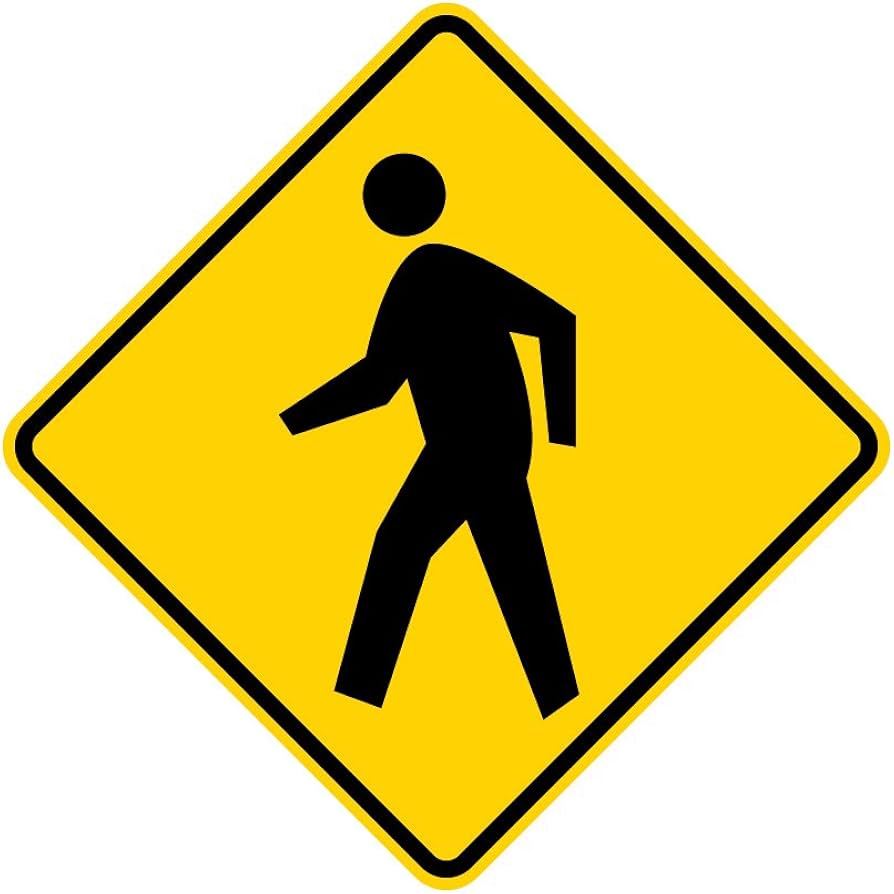
- Warning sign shape — UK warning signs use a red-border triangle; USA warning signs use a yellow diamond, making shape identification the fastest cross-system distinguisher
- Warning sign colour — UK warning signs use a white background with red border; USA warning signs use a fluorescent yellow or standard yellow background with black symbols
- STOP sign — both systems use a red octagon with white text, one of only 2 shape-and-colour conventions shared across both systems
- Speed limit display — UK signs display mph in a red-border circle; USA signs display mph in a rectangular white-background sign with black text and no border colour coding
- Regulatory sign format — UK prohibitory signs use red-border circles; USA prohibitory signs use rectangular white signs with black or red text, with no circular format equivalent
The FHWA MUTCD 11th Edition (2023) governs all 50 US states, while individual UK devolved authorities including Transport for London and Transport Scotland operate under TSRGD 2016 with local supplementary orders.
A driver licensed in the USA encountering UK roads faces 3 immediate adaptation points: circular sign shapes, mph red-border speed limits, and blue mandatory instruction signs none of which appear in the MUTCD system.
What International Licence Holders Must Learn Before Driving in the UK
International licence holders driving in the UK face 5 mandatory sign knowledge requirements under the Road Traffic Act 1988 and Highway Code Rules 243–252.
The DVLA permits international licence holders from designated countries to drive in the UK on their foreign licence for 12 months from the date of entry, after which a UK licence exchange or full test applies. During that 12-month period, full compliance with UK road signs is a legal obligation, not an advisory one.
The 5 mandatory sign knowledge areas for international drivers include:
- Speed limit sign identification — UK speed limits display in mph inside red-border circles; the national speed limit sign (diagonal black bar on white circle) applies 60 mph on single carriageways and 70 mph on dual carriageways and motorways
- Blue mandatory sign recognition — blue circular signs including Keep Left, Turn Left, and Minimum Speed carry legal obligations absent from many non-European sign systems, including the USA, Australia, and India
- Give Way and STOP sign compliance — the UK Give Way sign (inverted triangle, no text) differs from the textual “YIELD” sign used in the USA and Australia; the UK STOP sign (red octagon) aligns with international convention
- Motorway sign colour coding — UK motorway signs use blue backgrounds, contrasting with green motorway signs in Ireland, France, Germany, Spain, and most other countries international drivers originate from
- Temporary and roadworks sign authority — international drivers unfamiliar with UK fluorescent yellow-green temporary signs record higher non-compliance rates; the RAC Foundation notes temporary sign non-compliance as a disproportionate factor in international driver incidents in the UK
The DVSA theory test is a legal requirement for international licence holders who exchange to a full UK licence. The theory test includes 12–15 sign identification questions per sitting, drawn from the full TSRGD 2016 sign library of 450+ sign variants.
UK Road Signs and the Theory Test
The DVSA theory test assesses road sign knowledge across both the multiple-choice section and the hazard perception section. Passing requires a score of 43 out of 50 in the multiple-choice section and 44 out of 75 in hazard perception.
How Many Road Sign Questions Are in the Theory Test?
The DVSA theory test includes up to 25 road sign questions within its 50 multiple-choice questions, based on official DVSA question bank analysis. Questions cover sign identification, meaning, legal obligation, and correct driver response.
Road sign topics tested include:
- Sign shape and colour identification
- Speed limit recognition
- Warning sign interpretation
- Motorway and smart motorway signs
- Pedestrian and school crossing signs
- Temporary roadworks signs
The full question bank contains over 700 questions, of which approximately 35% relate directly to road signs, markings, and signals.
Most Commonly Failed Road Sign Questions
According to DVSA pass rate data, smart motorway signs, temporary roadworks signs, and lane control signals produce the highest failure rate in road sign questions. Approximately 49% of theory test candidates fail on their first attempt.
The 6 most commonly failed road sign question categories:
- Red X lane closed signals — candidates confuse advisory and mandatory status
- Temporary speed limit signs — yellow-backed signs during roadworks carry legal force
- Give Way vs STOP distinction — candidates misidentify legal stopping obligation
- Motorway route numbering — junction numbers and route panel colours confused
- Pedestrian crossing types — Puffin and Pelican crossing rules frequently confused
- Loading restriction kerb blips — single and double blip meanings reversed
Revision using the official DVSA revision app and Highway Code reduces failure rates by an estimated 30% among structured learners.
Best Tips for Memorising UK Road Signs Effectively
To memorise UK road signs effectively, use shape-first recognition, colour coding, and active recall testing across spaced repetition sessions. The DVSA recommends a minimum of 20 hours of theory revision for most candidates.
Five evidence-based memorisation methods:
- Group by shape — learn all triangles, then circles, then rectangles as distinct sets
- Group by colour — associate red with prohibition, blue with instruction, yellow with temporary
- Flashcard drilling — use the official DVSA app’s flashcard mode, covering 700+ questions
- Mock test repetition — complete a minimum of 10 full mock tests before the real test
- On-road observation — identify and name signs during driving lessons, reinforcing visual memory
Spaced repetition increases long-term sign retention by approximately 40% compared to single-session cramming, according to cognitive learning research.
How Glow Driving School Helps You Prepare for Your Theory Test
Glow Driving School integrates road sign recognition training into every practical lesson in Wimbledon, reinforcing theory knowledge with on-road application. Instructors identify signs during lessons, connecting Highway Code rules to real driving situations.
Theory preparation support at Glow Driving School includes:
- On-road sign identification during every lesson
- Instructor explanation of sign meanings and legal obligations
- Guidance on DVSA revision resources and mock test strategy
- Progress feedback aligned to theory test topic areas
Preparing for your theory test? Glow Driving School offers expert theory test guidance in Wimbledon — get in touch today.
Road Signs Every Learner and New Driver Must Prioritise
Learner drivers encounter over 50 distinct sign types in a typical lesson route. New and recently qualified drivers face the full range of UK sign types without instructor guidance for the first time.
Road Signs Learner Drivers Struggle With the Most
Learner drivers most commonly misread lane control signals, pedestrian crossing variants, and temporary speed limit signs, according to DVSA examiner feedback and driving school assessor data.
The 7 sign types learner drivers struggle with most:
- Smart motorway overhead signals — Red X and variable speed limits
- Temporary yellow-backed signs — speed limits and lane closures during roadworks
- Puffin vs Pelican crossing signals — sensor-controlled vs flashing amber phase
- Double white centre lines — solid vs broken line crossing permissions
- Countdown markers — 300, 200, and 100-yard motorway exit markers
- Give Way vs STOP — legal stopping obligation distinction
- Parking kerb blips — loading restriction hours and double blip meanings
Instructors at structured driving schools address these 7 categories within the first 15 hours of lessons.
Road Signs for Newly Qualified Drivers
Newly qualified drivers encounter motorway signs, smart motorway gantry signals, and box junction markings as the highest-risk sign categories, as these are not tested in the standard L-plate driving test route. The Pass Plus scheme covers motorway driving, including motorway sign recognition, across 6 structured modules.
Critical signs newly qualified drivers prioritise:
- Smart motorway variable speed limits — legally enforceable, camera-enforced
- Red X lane closed signals — mandatory, not advisory
- Yellow box junctions — entry prohibited unless exit is clear
- Contraflow bus lane signs — buses travel against traffic flow
- Clearway signs — no stopping at any time, including loading
Pass Plus completion reduces insurance premiums by up to 30% with participating insurers, according to DVSA records.
Road Signs You Will Encounter Driving in London and Wimbledon
Driving in London and Wimbledon involves Controlled Parking Zone signs, bus lane signs, Low Emission Zone markers, and Congestion Charge zone boundary signs at higher frequency than rural or suburban UK routes.
Key London and Wimbledon-specific signs:
- Congestion Charge zone sign — white rectangular panel, red C symbol, boundary entry point
- Ultra Low Emission Zone (ULEZ) sign — circular, displayed at zone boundary, non-compliant vehicles charged £12.50 daily
- Bus lane signs — blue rectangular panel, hours of operation displayed below
- Controlled Parking Zone entry sign — CPZ designation, restriction hours, residents’ bay details
- Clearway signs — common on A-roads through Wimbledon town centre
- Red Route signs — no stopping on red route roads, double red lines at kerb
Transport for London (TfL) manages over 580 km of red routes across London, including sections of the A3 passing through Wimbledon. ULEZ covers all London Boroughs as of August 2023.
UK Road Signs Quick Reference Cheat Sheet
The UK road sign system organises all 430+ signs across 3 classification layers: purpose, shape, and colour. This cheat sheet covers the core identification attributes of every major sign category.
Summary Table — Sign, Shape, Colour and Meaning at a Glance
| Sign Category | Shape | Colour | Meaning |
| Speed limit | Circle | Red border, white | Maximum speed in mph |
| National speed limit | Circle | White, black diagonal stripe | 60 mph single / 70 mph dual |
| No entry | Circle | Red, white horizontal bar | Entry prohibited |
| Give Way | Inverted triangle | Red border, white | Yield to major road traffic |
| STOP | Octagon | Red, white lettering | Mandatory full stop |
| Warning signs | Triangle | Red border, white | Hazard ahead |
| School warning | Pentagon | Yellow background | School zone ahead |
| Motorway direction | Rectangle | Blue, white lettering | Motorway route guidance |
| Primary route direction | Rectangle | Green, white lettering | A-road route guidance |
| Local direction | Rectangle | White, black lettering | Local road navigation |
| Temporary / roadworks | Rectangle | Yellow background | Temporary restriction |
| Tourist destination | Rectangle | Brown, white lettering | Leisure and tourist site |
| Mandatory instruction | Circle | Blue, white symbol | Instruction must be followed |
| Parking restriction | Circle | Blue or red border | Parking rules |
| Bus lane | Rectangle | Blue | Bus lane operation hours |
| Red route | Kerb marking | Double red line | No stopping at any time |
| Loading restriction | Kerb blip | Yellow | Loading hours restriction |
How to Use This Cheat Sheet for Theory Test Revision
To use this cheat sheet effectively, test shape recognition first, then colour, then meaning — in that order. Shape is the fastest visual identifier at road speed, followed by colour, then the specific symbol or text.
A structured 3-stage revision approach:
- Stage 1 — Shape drill — Cover the colour and meaning columns. Identify sign category from shape alone. Repeat until 100% accuracy across all rows.
- Stage 2 — Colour drill — Cover the meaning column. Match shape and colour to the correct category. Complete in under 30 seconds per row.
- Stage 3 — Full recall — Cover all columns. State shape, colour, and meaning from memory for each sign category. Repeat daily for 7 days before the theory test.
Combining this cheat sheet with 10 full DVSA mock tests produces the strongest theory test preparation outcomes.
Want personalised help mastering road signs? Book a lesson with Glow Driving School in Wimbledon.
Frequently Asked Questions About UK Road Signs
What Are the Four Main Categories of UK Road Signs?
The four main categories of UK road signs are warning signs, regulatory signs, information signs, and direction signs. Warning signs use red-bordered triangles, regulatory signs use circles, information signs use rectangles, and direction signs use colour-coded rectangles by route type.
What Does a Red Circle Road Sign Mean in the UK?
A red circle road sign indicates a prohibition or speed limit restriction. Red-bordered circles with a white background display speed limits in mph. Solid red circles with white symbols prohibit specific actions, including no entry, no U-turn, and no overtaking, under TSRGD 2016.
How Do I Learn Road Signs for the Theory Test?
To learn road signs for the theory test, use shape grouping, colour association, and spaced repetition flashcard drilling across a minimum of 20 revision hours. The official DVSA revision app covers all 700+ theory test questions, including the full road sign bank.
What Is the Difference Between Warning and Regulatory Signs?
Warning signs use red-bordered triangles to alert drivers to hazards ahead, carrying no direct legal obligation. Regulatory signs use circles — red-bordered for prohibitions and blue for mandatory instructions — and carry a legal obligation to comply under the Road Traffic Act 1988.
Are UK Road Signs the Same as EU Road Signs?
UK road signs are broadly similar but not identical to EU road signs. Both systems use the Vienna Convention framework of triangles for warnings and circles for orders. Key differences include UK-specific signs, including the national speed limit diagonal stripe, the STOP octagon in English, and mph-based speed limit panels.
What Shape Are Warning Signs in the UK?
Warning signs in the UK are red-bordered equilateral triangles with a white background and a black symbol. The give way sign is the single exception, using an inverted red-bordered triangle. All other warning signs point upward, as defined in TSRGD 2016.
How Many Road Signs Are Listed in the Highway Code?
The Highway Code references over 430 road signs, organised across traffic signs, road markings, and signals. The full legal reference is the Traffic Signs Regulations and General Directions (TSRGD) 2016, which defines every sign’s shape, colour, dimension, and legal status.
Start Your Driving Journey with Glow Driving School in Wimbledon
Why Glow Driving School Is the Right Choice for Learner Drivers in Wimbledon
Glow Driving School delivers DVSA-standard driving instruction across Wimbledon and the surrounding SW19 area, with instructors trained to DVSA Approved Driving Instructor (ADI) qualification level. Lessons cover all Highway Code sign categories within structured, progressive lesson plans.
Glow Driving School’s approach to road sign training includes:
- Real-time sign identification on Wimbledon’s local road network
- Theory test topic integration into every practical lesson
- Structured progress tracking across all DVSA test competencies
- Lessons available on key Wimbledon routes, including the A3, A238, and town centre roads
Wimbledon’s road network includes red routes, CPZs, ULEZ boundary signs, and high-frequency pedestrian crossings — giving learners direct exposure to the full range of UK sign types within local lessons.
Book Your Driving Lesson Today
Glow Driving School accepts lesson bookings for learners at all stages, from first lesson to test-ready. Lessons take place across Wimbledon, Raynes Park, Merton, and surrounding SW London areas.
Ready to get on the road confidently? Glow Driving School in Wimbledon is here to guide you every step of the way from road signs to your driving test. Book your lesson today.