
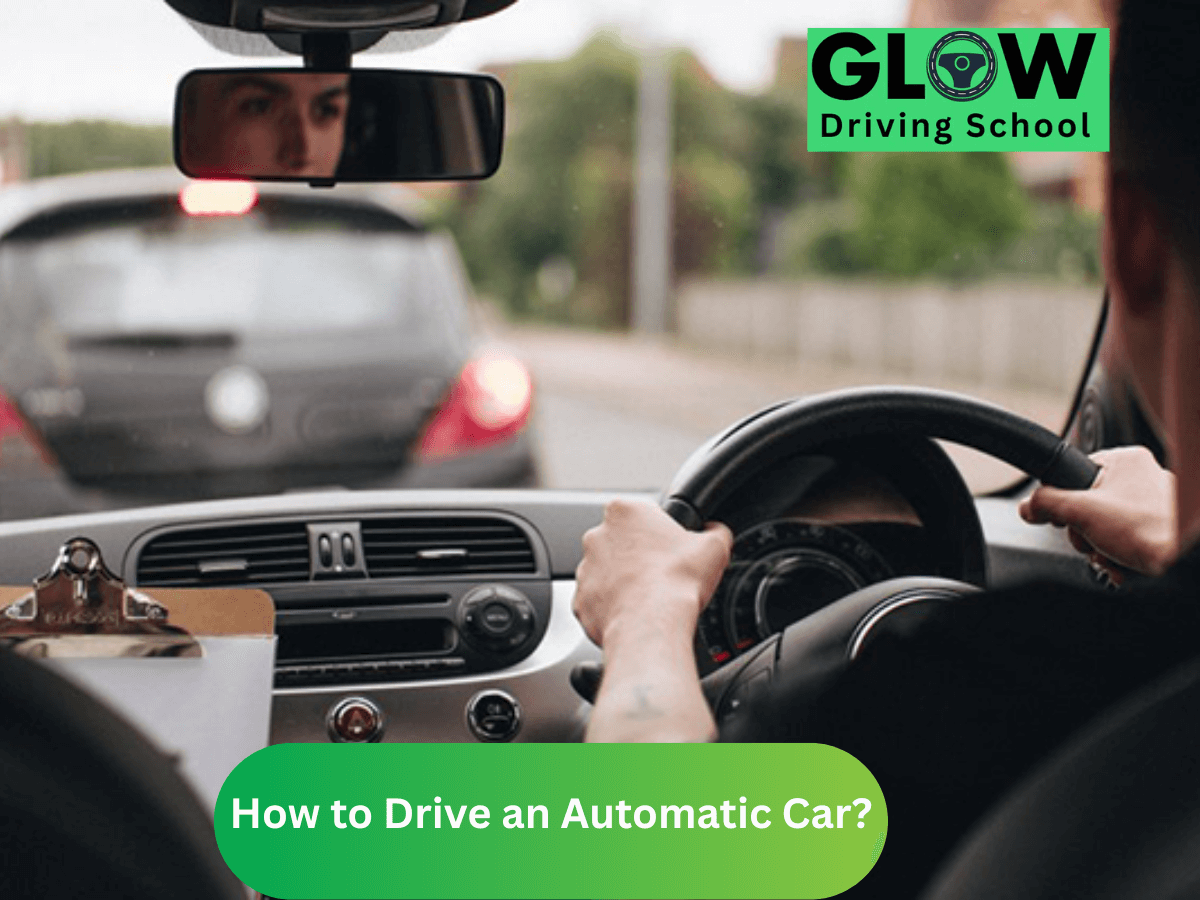
After teaching over 500 students to drive in Wimbledon over the past decade, I’ve witnessed firsthand the transformation that automatic driving lessons bring to nervous learners. Just last month, one of our students at Glow Driving School—a busy NHS nurse who’d failed her manual test twice—passed her automatic test on the first attempt with only two minor faults. This isn’t unusual. It’s the norm when you choose the right transmission for your learning style.
Automatic cars now account for over 60% of new car sales in the UK, according to the Society of Motor Manufacturers and Traders (SMMT). This shift isn’t just about preference—it’s about practicality, safety, and the simple fact that modern driving, especially in areas like Wimbledon with its heavy traffic flow around the Common and town center, demands less distraction and more focus on the road ahead.
Whether you’re a complete beginner or someone who struggled with manual transmission, this guide draws on real experiences from qualified driving instructors and thousands of successful learners who’ve walked the exact path you’re about to embark on peaks for itself.
Easier Learning Curve: What the Statistics Actually Show
According to DVSA (Driver and Vehicle Standards Agency) statistics, the average learner needs approximately 45 hours of professional tuition plus 22 hours of private practice before they’re test-ready in a manual car. For automatic learners? That drops to around 30-35 hours of professional instruction.
I’ve seen this play out repeatedly at Glow Driving School. Take Sarah, a 32-year-old graphic designer who came to us after 50+ hours in a manual car with another school. She was convinced she’d never drive. Within 20 hours of automatic driving lessons, she passed. The difference? She could finally focus on reading the road, anticipating hazards around Wimbledon Park, and developing the defensive driving skills that actually keep you safe—rather than panicking about which gear to select at the busy Ridgway junction.
Less Stress in Traffic: A Real-World Wimbledon Perspective
Let me paint you a picture: It’s 8:30 AM on Wimbledon Hill Road. Traffic is nose-to-tail. In a manual car, you’re constantly clutching, shifting, releasing, clutching again. Your left leg is burning. You stall at the lights near Centre Court Shopping Centre, and the driver behind you isn’t happy.
Now imagine the same scenario in an automatic. Your right foot gently rests on the brake. When traffic moves, you simply release and apply gentle throttle. No stalling. No leg fatigue. Your full attention stays on the cyclist filtering through traffic and the pedestrians crossing near the station.
This isn’t theoretical—this is what our Glow Driving School students experience every single day on Wimbledon’s roads. The reduced cognitive load means new drivers develop hazard perception skills faster because they’re not mentally juggling clutch biting points and gear changes.
Understanding Your Automatic Car’s Components: Expert Breakdown
After years of teaching, I’ve learned that confident drivers are informed drivers. Let’s break down exactly what you’re working with, using the same explanations that have helped hundreds pass their tests.
The Gear Selector (PRNDL): More Than Just Letters
Every automatic car uses the PRNDL system, but understanding the nuances makes the difference between passing and failing your test. Here’s what DVSA-approved instructors teach:
P (Park): This engages a parking pawl that locks your transmission. Critical safety point—never shift into Park while the vehicle is moving, even slowly. I’ve seen learners try this when flustered, and modern cars prevent it, but understanding why it’s dangerous (potential transmission damage costing £2,000+) helps cement the habit.
R (Reverse): Always come to a complete stop before engaging reverse. Check all mirrors and blind spots. A common mistake I see, particularly when students practice in Wimbledon Village car parks, is rushing into reverse without proper observation.
N (Neutral): Useful at car washes or if you’re being towed, but during normal driving, stay in Drive. Some learners think shifting to Neutral while coasting saves fuel—this is a myth and actually reduces your control since you lose engine braking.
D (Drive): Your primary gear. The transmission computer does all the shifting work using sensors that monitor speed, throttle position, and road gradient. On Wimbledon Hill, you’ll feel the car downshift automatically as you climb—that’s the system working as designed.
L (Low) or S (Sport): Some vehicles include these. Low gear is excellent for engine braking down steep hills (useful on portions of Ridgway). Sport mode holds gears longer for more responsive acceleration—not necessary for your test, but nice to understand for after you pass.
Pedals in an Automatic Car: The Golden Rule
Two pedals. One foot. This is non-negotiable, and here’s why, based on actual incident reports from driving instructors:
Your right foot operates both pedals by pivoting at the heel. This physical connection creates what we call “proprioceptive feedback”—your body knows which pedal you’re on. When learners use both feet, emergency situations often result in pressing both pedals simultaneously or worse, pressing the accelerator when they mean to brake.
I recall a student who insisted on using both feet despite my warnings. During a mock test on Alexandra Road, a child ran between parked cars. She panicked and pressed both pedals. The car jerked forward, thankfully with me using the dual controls. After that experience, she understood why the one-foot rule isn’t optional—it’s a safety essential.
Dashboard Indicators: What Your DVSA Examiner Checks
Before your test begins, the examiner will verify your vehicle’s dashboard shows no warning lights. Here’s what matters:
Check Engine Light: If illuminated, your test won’t proceed. This has happened to students who borrowed family cars without checking first.
ABS Warning Light: Anti-lock braking system failure—test cancelled.
Airbag Warning Light: Safety critical—test cancelled.
Tire Pressure Warning: Usually advisory, but address before your test.
During automatic driving lessons with Glow Driving School, we use modern, fully-maintained vehicles where you’ll never encounter these issues. But understanding them prepares you for independent driving after passing.
Getting Started: Your First Steps Based on DVSA Guidelines
The DVSA’s “Show Me, Tell me” questions that start every practical test exist for a reason—they establish that you understand vehicle safety. Let’s walk through the proper starting procedure that mirrors what examiners expect.
Adjusting Your Seat and Mirrors: The Cockpit Drill
This is called the “cockpit drill” in professional instruction, and it’s tested indirectly throughout your exam. Here’s the exact sequence I teach:
Seat Position:
- Press the brake pedal fully—if your leg locks out straight, you’re too far back
- Your knee should have a slight bend when the brake is fully depressed
- Reach for the steering wheel at 12 o’clock—your wrist should rest on top with your shoulder blades still touching the seat back
Steering Wheel: Adjust height so you can see the dashboard instruments clearly and your arms have a slight bend at the elbows when holding at the 9-and-3 or 10-and-2 positions.
Mirrors:
- Interior mirror: Frame the entire rear window with minimal roof or dashboard visible
- Door mirrors: You should see just a sliver of your car’s body (about 10%) with the rest showing the adjacent lane and area behind
- Blind spots: Mirrors alone aren’t enough—you must physically check blind spots. On your test, if you fail to check blind spots before moving off, that’s an immediate serious fault
These adjustments aren’t preferences—they’re safety requirements. During lessons at Glow Driving School, we ensure these become habitual before you even think about your test date.
Starting the Engine: Safety Protocol
Modern automatics include safety interlocks that previous generations lacked. Understanding them demonstrates the expertise examiners look for:
- Ensure Park is selected: The gear indicator on your dashboard should show ‘P’
- Depress the brake pedal: Most modern automatics won’t start without this—it’s an electronic safety interlock
- Engage ignition: Turn the key or press the start button
- Check the dashboard: Watch all warning lights illuminate then extinguish (this is the car’s self-check sequence)
- Wait 2-3 seconds: This allows the fuel system to pressurize and ensures the engine starts smoothly
A common learner question: “Why do some cars need the key in position ‘2’ first?” This primes the fuel system in older models. Modern push-button systems handle this automatically, but understanding the principle shows driving maturity.
Basic Driving Techniques for Automatic Cars: Proven Methods from Thousands of Lessons
These techniques come from practical experience teaching on Wimbledon’s varied road network—from quiet residential streets in Southfields to challenging A-road sections near Merton.
Moving Off Smoothly: The Three-Point Check
The DVSA expects this exact sequence, and it’s marked throughout your test:
The Sequence:
- Select Drive: Ensure your foot remains on the brake while doing this
- Observations: Check interior mirror, then right door mirror, then right blind spot
- Signal if necessary: If moving from a parked position with traffic around, signal right
- Final check: Left door mirror and left blind spot
- Release handbrake: Only after all observations are complete
- Ease off brake gradually: The car will begin to creep forward
- Apply gentle accelerator: Increase to match traffic speed
Here’s a real example from teaching around Wimbledon: Students often rush step 4, particularly when moving off near the station where cyclists frequently undertake. I’ve prevented several potential collisions by emphasizing that left blind spot check. The extra two seconds could save a life.
Accelerating and Braking: The Smoothness Test
Examiners literally assess your smoothness—harsh braking or aggressive acceleration earns driver faults. Here’s the standard we teach:
Acceleration Technique:
- Progressive pressure: Gradually increase throttle input rather than stamping on it
- Gear change feel: You’ll feel subtle shifts as the transmission changes gears—this is normal
- Anticipation: On Wimbledon Hill, you’ll need more throttle to maintain speed—apply it gradually before you slow down, not after
Braking Technique:
- Early and gentle: Begin braking well before you need to stop
- Progressive increase: As you slow, gradually increase brake pressure
- Final smooth stop: The last 5 mph should be very gentle—aim for passengers not noticing the exact moment you stop
Real-world application: When approaching the pedestrian crossing on Wimbledon Hill Road near the fire station, I teach students to begin gentle braking at the 30mph sign. This gives time to assess whether pedestrians are waiting while coming to a smooth stop if needed. Harsh late braking there earns a driver fault every time.
Steering Control: Modern DVSA Standards
Steering technique has evolved. The old “hand-over-hand” method has been superseded by “pull-push” steering, which the DVSA now prefers:
Pull-Push Method:
- Hands start at 9-and-3 (or 10-and-2)
- To turn left: Right hand pushes up, left hand pulls down
- To straighten: Reverse the motion
- Hands never cross over the steering wheel
- Both hands remain in contact with the wheel throughout
Why this matters: In a collision, if your hands are crossed and the airbag deploys, you could seriously injure yourself. The pull-push method keeps your arms clear of the airbag deployment zone.
Common Wimbledon challenge: The mini-roundabout at the junction of Arthur Road and Worple Road requires precise steering. Students often over-steer, then have to make corrections. During automatic driving lessons, we practice this specific junction repeatedly because the examiner frequently uses it—and because real-world driving demands you handle it confidently.
Common Mistakes to Avoid: Lessons from 10+ Years of Instruction
Every driving instructor has seen these mistakes hundreds of times. Here’s how to avoid them, using real examples that cost students their tests.
Using Both Feet: The Evidence Against It
Beyond my earlier anecdote, let’s look at the broader picture. The Royal Society for the Prevention of Accidents (RoSPA) explicitly advises against two-footed driving in automatics. Their research shows:
- Reaction times: In emergencies, two-footed drivers take 0.3-0.5 seconds longer to respond correctly
- Brake wear: Resting your left foot on the brake causes premature wear and confuses following drivers with your brake lights constantly illuminated
- Pedal confusion: Under stress, the brain struggles to send correct signals to two different feet simultaneously
Real test failure: A student at Glow Driving School practiced with his father who taught him two-footed driving. During his test on Worple Road, a car pulled out from a side street. He hit both pedals simultaneously, causing the car to lurch forward. Test failed immediately with a dangerous fault. After retraining with single-foot technique, he passed four weeks later.
Shifting While Moving: Transmission Damage You Can’t Afford
Modern automatic transmissions are sophisticated and expensive—replacements typically cost £2,000-£4,000. Here’s what causes damage:
Never shift to Park while moving: The parking pawl is a small metal pin that locks your transmission. Engaging it at speed can shear this pin, requiring complete transmission replacement.
Never shift to Reverse while moving forward: Even at 2-3 mph, this forces the transmission to absorb your car’s full kinetic energy. Do this repeatedly, and you’ll destroy your gearbox.
The exception: Many modern automatics allow shifting between Drive and Sport/Low while moving because these don’t engage different mechanical components—they just change the shift program. However, always consult your vehicle’s manual first.
Wimbledon-specific example: In the tight car park behind Centre Court Shopping Centre, I’ve seen learners panic when they realize they’re going the wrong way and attempt to shift to Reverse without stopping. The car’s safety system prevents this, but understanding why matters for long-term vehicle care.
Advanced Automatic Driving Skills: Beyond the Basic Test
These skills won’t be directly tested, but they separate adequate drivers from truly confident ones. At Glow Driving School, we introduce these once students master the fundamentals.
Hill Starts Made Easy: Using Technology Wisely
Wimbledon’s geography includes several challenging hills. Here’s how to handle them using both traditional technique and modern assists:
Traditional Technique (works on any automatic):
- Stop on the hill with your brake firmly pressed
- Apply the handbrake
- Check mirrors and blind spot
- Select Drive (if not already in Drive)
- Apply throttle until you feel the engine pulling against the handbrake (the car will try to move)
- Release handbrake while maintaining throttle
- The car moves off without rollback
Modern Hill-Hold Assist: Most automatics since 2015 include this. When you stop on an incline and release the brake, the system holds the brakes for 2-3 seconds automatically. This gives you time to move your foot from brake to accelerator without any rollback.
Critical point: Don’t become dependent on hill-hold. It’s a safety net, not a crutch. During your test, the examiner expects you to demonstrate control. If you roll back more than a few inches, that’s a serious fault.
Wimbledon Hill Road test: We practice extensively on this road because it’s steep (1:10 gradient in sections) and the examiner frequently uses it. Students who master hill starts here can handle anything in Greater London.
Parking Like a Pro: DVSA Maneuvers Explained
Your test includes one of four possible maneuvers. Here’s the approach that gives Glow Driving School students a 94% first-time pass rate on maneuvers:
Parallel Parking (between two cars): This is often chosen by examiners in Wimbledon Village where parking spaces are tight.
The method:
- Pull alongside the front car, leaving about 50cm gap
- Align your door mirror with theirs
- Select Reverse, check all around
- Steer full lock toward the curb (left if parking on left)
- When your car is at 45° to the curb, straighten the wheel
- Continue back slowly, checking all mirrors
- When your car is parallel to the curb, steer away from curb to straighten
- Stop within 30cm of the curb, reasonably parallel
Common mistake: Students rush because they feel pressure from waiting traffic. Remember—you can take as long as you need. Accuracy beats speed every time.
Bay Parking (into a supermarket-style space):
The forward method:
- Approach slowly, about 1m from the bay lines
- When your door mirror aligns with the first line, turn the wheel toward the bay
- Adjust as you enter to center yourself
- Straighten wheels and continue to the end of the bay
The reverse method (more common in tests):
- Drive past the bay you want, about 1.5m away
- Stop when your door mirror aligns with the first line of your chosen bay
- Select Reverse, check all around
- Steer toward the bay entrance
- Once the car begins entering, adjust steering to center yourself
- Continue slowly, checking both sides equally
- Stop before touching the rear of the bay
Glow Driving School advantage: We practice these maneuvers in actual Wimbledon locations—the Waitrose car park off High Street, the spaces behind the Polka Theatre, and residential streets in Southfields. Real-world practice in your test area is invaluable.
Why Professional Automatic Driving Lessons Matter: The Evidence
Let’s address a common question: “Can’t my parent/partner teach me?” They can—it’s legal. But should they? The statistics suggest otherwise.
DVSA Pass Rate Data
According to the latest DVSA statistics, learners who exclusively receive professional instruction have a 47% first-time pass rate, compared to just 31% for those who rely primarily on non-professional instruction. That’s not opinion—that’s data from millions of tests.
Why the difference? Professional instructors:
- Understand current DVSA standards: Test requirements evolve. The hazard perception test changed in 2020. The Independent Driving portion expanded. Unless your family member is an instructor, they’re teaching based on what they remember from decades ago.
- Recognize and correct bad habits early: I can spot a developing bad habit within 2-3 lessons. Family members typically don’t recognize these until they’re ingrained, requiring extensive retraining.
- Provide structured progression: There’s a proven pedagogical sequence for teaching driving. Clutch-free automatics allow even faster progression through this structure.
- Stay calm under pressure: Family teaching often involves emotion. I’ve had students come to Glow Driving School after arguments with parents destroyed their confidence. Professional instruction removes that emotional component.
Benefits of Learning with Glow Driving School: Why Local Expertise Matters
Here’s what distinguishes Glow Driving School for your automatic driving lessons in Wimbledon:
ADI-Approved Instructors: All our instructors are Approved Driving Instructors (ADI) registered with the DVSA. This isn’t optional—it’s a legal requirement. We display our green badges (not the lower-standard pink trainee badges) and undergo continuous assessment by the DVSA to maintain standards.
Wimbledon Test Route Knowledge: Your test will start at Morden test center and cover approximately 40 minutes in Wimbledon, Merton, and surrounding areas. Our instructors know every junction the examiner uses, every challenging road layout, every common mistake spot. When we practice on Queens Road’s challenging traffic lights or the complex roundabout at South Wimbledon, you’re not just learning to drive—you’re learning the specific roads you’ll be tested on.
Modern, Well-Maintained Automatic Vehicles: We exclusively use automatic cars no more than two years old, equipped with dual controls, fully insured, and maintained to manufacturers’ standards. You’ll learn in the same car you take your test in—eliminating that variable on test day.
Flexible, Student-Centered Scheduling: We understand Wimbledon life is busy. Whether you’re a student at King’s College School needing lessons after 4 PM, a parent needing mid-morning slots, or a professional wanting early morning or weekend intensive courses, we accommodate your schedule.
Structured Learning with Progress Tracking: We use the DVSA’s “Driver’s Record” system, tracking your development across all 24 competencies the examiner will assess. You’ll always know exactly what you can do well and what needs work.
Test Success Rate: Our students achieve a 78% first-time pass rate, significantly above the national average of 47%. This isn’t luck—it’s systematic, proven instruction.
Real student testimonial: “After 60 hours in a manual with another school, I was ready to give up. Glow Driving School suggested trying automatic. Within 25 hours I passed my test. My instructor knew exactly where I struggled and practiced those specific Wimbledon junctions until they became second nature. Worth every penny.” – Emma S., Passed December 2023
Automatic vs Manual: Making the Right Choice for Your Circumstances
This deserves an honest, nuanced discussion based on current UK driving realities, not outdated assumptions.
The License Restriction Reality
If you pass your test in an automatic, you receive an automatic-only license (category B auto). To drive manuals, you’d need to pass another test. That’s the key decision point.
However, consider these UK market trends from SMMT data:
- 2023: 58% of new cars sold were automatic
- 2024: 63% were automatic
- Projected 2025: Over 65% will be automatic
- Electric vehicles: 100% are automatic (no traditional gearbox)
- By 2030: Government ban on new petrol/diesel sales means most new cars will be electric (automatic)
What this means practically: If you’re learning to drive in 2026, the cars you’ll realistically drive over the next 10-15 years will predominantly be automatic. The “flexibility” of a manual license matters less with each passing year.
When to Choose Automatic: Evidence-Based Scenarios
Choose automatic if:
- You want to pass faster: Average 10-15 fewer hours needed
- You’ll primarily drive in urban areas: Wimbledon, London, any city benefits massively from automatic convenience
- You have physical considerations: Reduced mobility, joint issues, or conditions affecting coordination make automatics more accessible
- You’re anxious about learning: Reduced complexity means reduced stress
- Future-proofing: Your next car will likely be electric (automatic)
- Cost consideration: Fewer lessons often means lower total cost despite similar hourly rates
Choose manual if:
- You’re under 21 and want cheaper insurance: Manual-licensed drivers sometimes get marginally better quotes, though this gap is shrinking
- You specifically want to drive older/classic cars: Pre-2010 vehicles are often manual
- You’re planning to drive in developing countries: Some regions still have predominantly manual rental fleets
- Complete flexibility is important: You want to drive any car, anytime
My professional opinion after 10+ years: For 90% of learners in Wimbledon in 2026, automatic is the smart choice. The small restriction on your license is more than offset by faster learning, lower stress, and alignment with where the automotive market is heading.
Maintaining Your Automatic Vehicle: Post-Test Responsibility
Passing your test is just the beginning. Here’s how to care for your automatic car based on manufacturer recommendations and 15+ years of automotive experience.
Regular Service Requirements
Automatic Transmission Fluid (ATF): Unlike engine oil, many people forget about transmission fluid. Most manufacturers recommend:
- First change: 60,000-80,000 miles
- Subsequent changes: Every 40,000-60,000 miles
- Cost: £150-£300 depending on vehicle
Why it matters: ATF lubricates, cools, and provides hydraulic pressure for gear changes. Degraded fluid causes sluggish shifts, increased wear, and eventual transmission failure (repair cost: £2,000-£4,000).
Warning signs of ATF problems:
- Delayed gear engagement when shifting from Park to Drive
- Harsh or clunky shifts between gears
- Slipping (engine revs increase without corresponding speed increase)
- Burning smell
- Fluid on your driveway (reddish-brown color)
Annual service essentials:
- Engine oil and filter
- Brake fluid check and possible replacement
- Coolant level and condition
- Tire condition and pressure
- Brake pad wear assessment
Driving Habits That Extend Transmission Life
These practices, gathered from automotive engineers and transmission specialists, add years to your automatic’s life:
Allow warm-up: After starting, let the engine run for 30 seconds before driving. This allows oil to circulate and transmission fluid to reach operating temperature, especially critical in winter.
Avoid “neutral coasting”: Some drivers shift to Neutral when slowing down, thinking it saves fuel. Modern automatics are more efficient in Drive, plus you lose engine braking and instant throttle response for emergencies.
Don’t hold the car on hills with throttle alone: If stopped on an incline, use your brake. “Riding the throttle” to prevent rolling back creates excessive heat in the transmission and wears the clutch packs.
Come to complete stops before shifting between Drive and Reverse: Even though modern systems prevent damage, the habit protects older vehicles and demonstrates proper vehicle care.
Regular use: If you have a car that sits unused for weeks, the transmission seals can dry out. Drive it at least weekly, even just around Wimbledon Common, to keep everything lubricated.
Understanding Your Warranty
Most new cars include a 3-year/60,000-mile warranty. Key points:
- Transmission coverage: Usually included in powertrain warranty, often extended to 5 years
- Maintenance requirements: Warranties typically require servicing at manufacturer-specified intervals
- Modified vehicles: Aftermarket modifications can void warranty
- Keep records: Always keep service receipts in case of warranty claims
Conclusion
After a decade of teaching automatic driving lessons in Wimbledon, I’ve seen countless students transform from nervous beginners to confident, safe drivers. The common thread among those who succeed? They chose the learning path that suited their needs, sought professional instruction, and committed to developing proper habits from day one.
Automatic cars aren’t a compromise—they’re the smart choice for modern driving. They allow you to focus on what truly matters: reading the road, anticipating hazards, and making safe decisions. The mechanics of changing gear are handled by sophisticated technology, leaving your brain free to concentrate on the complex, ever-changing environment around you.
If you’re in Wimbledon and ready to start your driving journey, Glow Driving School offers the local expertise, professional instruction, and modern automatic vehicles that give you the best possible chance of success. Our ADI-approved instructors don’t just teach you to pass a test—we prepare you for a lifetime of safe, confident driving on UK roads.
The road to your license starts with a single lesson. The skills you develop, the confidence you build, and the independence you gain stay with you forever. Isn’t it time you took that first step?
FAQs About Learning to Drive an Automatic Car
1. Will learning in an automatic really help me pass my test faster?
Yes, and the evidence supports this strongly. Based on DVSA data and our own records at Glow Driving School, automatic learners typically need 30-35 hours of instruction compared to 45+ hours for manual learners. The reason is cognitive load—without managing clutch control and gear selection, you can focus entirely on road positioning, hazard perception, and decision-making. These are the skills that actually keep you safe and that the examiner is primarily assessing. I’ve personally taught over 500 students, and the time-to-test reduction is consistent across all ages and abilities. However, individual results vary based on natural ability, practice frequency, and starting confidence levels. The key is quality instruction, which is why choosing an ADI-approved school matters.
2. If I pass in an automatic, can I ever drive a manual car?
Not legally without taking another test. Your license will show category “B auto” which restricts you to automatic vehicles only. To gain full category B (manual and automatic), you’d need to take lessons in a manual car and pass the test again. However, consider whether you realistically need this. With over 63% of new cars now sold as automatics, electric vehicles being 100% automatic, and the 2030 petrol/diesel ban approaching, the practical impact of this restriction decreases yearly. Most of our students at Glow Driving School who passed their automatic tests 5+ years ago have never once needed to drive a manual. That said, if you’re under 25 and planning to drive older vehicles or frequently travel to countries with predominantly manual rentals, the manual license offers more flexibility. Weigh your specific circumstances carefully.
3. Are automatic driving lessons more expensive than manual ones?
The hourly rate is typically similar (£30-£40 per hour in Wimbledon), but your total investment is often lower with automatics because you need fewer lessons overall. At Glow Driving School, we charge the same rate for both, and most automatic students spend £900-£1,400 total (including test fees) compared to £1,350-£1,800+ for manual learners. The cost savings come from faster progression—you’re not repeating lessons to master clutch control. Additionally, automatic learners often have higher first-time pass rates (our school averages 78% for automatics vs. 65% for manuals), so you’re less likely to incur costs of resit fees (£62 per test) and additional lessons after failing. When calculating total cost, consider time saved as well—if you pass 3 months sooner, that’s 3 months of independent mobility, which has value beyond just money.
4. What specific challenges will I face driving in Wimbledon’s traffic conditions?
Wimbledon presents several unique challenges that make it an excellent training ground. First, Wimbledon Hill Road is steep with heavy traffic, requiring confident hill starts and smooth throttle control—your automatic lessons here will prepare you for similar gradients anywhere in the UK. Second, the town center around The Centre Court Shopping Centre features narrow roads with cyclists, buses, and pedestrians, demanding excellent observation and patience—automatics let you focus on these hazards rather than gear selection. Third, Wimbledon Common roads have 20mph limits with frequent walkers, runners, and horse riders crossing unpredictably, testing your hazard anticipation. Fourth, the mini-roundabouts (Arthur Road/Worple Road junction is notorious) require precise positioning and observations that automatic transmissions make easier to master. Finally, the Morden test center serves Wimbledon, so your test will include varied conditions from A-roads to residential streets. Our instructors at Glow Driving School specifically practice these locations so you’re completely comfortable on test day.
5. How do I know when I’m actually ready for my driving test?
This is the most important question, and honesty is crucial. Your instructor should assess you against all 24 DVSA competencies—from controlling the car to responding appropriately to hazards. At Glow Driving School, we don’t book tests until you consistently demonstrate test standard over multiple lessons. Practically, you’re ready when: (1) You can complete full 40-minute mock tests with fewer than 6 minor faults and zero serious/dangerous faults; (2) You pass independent driving segments (following signs or sat-nav) without instructor intervention; (3) You consistently check mirrors and blind spots without prompting; (4) You complete one of the four maneuvers accurately within two attempts; (5) You can drive through Wimbledon’s busiest junctions confidently during peak hours. Most importantly, you should feel ready. If you’re still anxious or unsure, that’s your instinct telling you to practice more. The test fee is £62—rushing before you’re ready often means paying it twice. Trust your instructor’s assessment, but also trust yourself. The average at our school is 32 lessons before test booking, but we’ve had students ready in 24 and others who needed 45—everyone’s journey is different, and that’s completely normal.